
Ecotoxicity: Preserving Aquatic Biodiversity
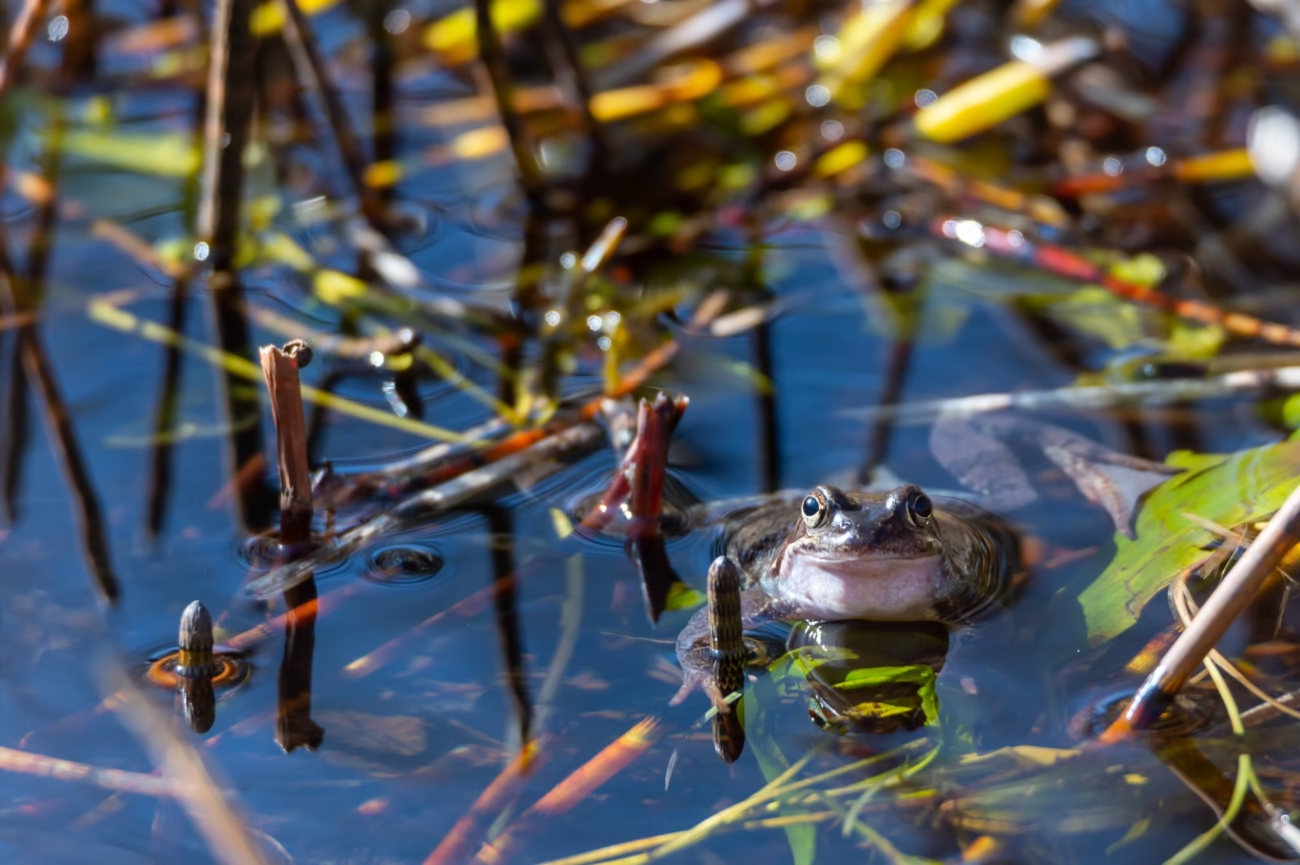
One of the most relevant metrics for evaluating the environmental impact of disinfectants is measuring their footprint on aquatic ecosystems. These species and environments are particularly vulnerable to chemical pollutants. Ecotoxicity is generally measured by the Median Lethal Concentration ($LC_{50}$), which kills 50% of an aquatic test population. Consequently, the more harmful a chemical substance is to species, the lower the LC50 value, meaning that an extremely small quantity of the active substance can destroy half of the measured population.
Salveco Lactic Acid Technology: Exhibits an LC50 greater than 100 mg/L for fish, crustaceans, and algae, confirming that the active substance in Salveco solutions has a very low impact on aquatic species.
Quaternary Ammonium Compounds & Sodium Hypochlorite: Conversely, they display significantly lower LC50 values. This signals high toxicity in disinfectant products containing these active ingredients; even at very low doses, these substances exert a severe impact on aquatic organisms.
Ethanol: Shows substantially lower aquatic toxicity due to its high volatility and evaporation rate, resulting in minimal impact on organisms in aqueous environments.
Summary: Quaternary ammonium compounds (such as DDAC and ADBAC) and sodium hypochlorite pose serious long-term risks to aquatic ecosystems. Salveco’s unique patented lactic acid disinfection technology stands out for its minimized footprint on biodiversity and aquatic habitats.
Regulatory Safety and Hazard Communication (CLP)
Through the CLP Regulation (Classification, Labelling and Packaging), the European Union evaluates and classifies chemical substances based on their hazardous profiles. This regulation aims to standardize the communication of dangers for all chemical substances and hazardous mixtures across Europe.
Quaternary Ammoniums & Sodium Hypochlorite: Disinfectants containing these substances are classified as presenting severe environmental risks, mandated to display the GHS09 hazard pictogram (dead fish and tree) accompanied by hazard statements: “Very toxic to aquatic life” (H400) and “Very toxic to aquatic life with long-lasting effects” (H410).
Ethanol: While safer from an aquatic toxicity perspective, its risks are primarily associated with flammability, requiring the GHS02 flame pictogram and hazard statement: “Highly flammable liquid and vapour” (H225).
Salveco Technology: Salveco’s patented technology remains unclassified under CLP regulations, guaranteeing the absence of chemical hazard labeling and a reduced environmental footprint. Our patent avoids the severe classifications linked to traditional active substances, making it a safer option for both industrial and domestic environments. This distinction perfectly aligns with public policies and corporate ESG commitments that prioritize products with minimal environmental footprints.
Biodegradability: Rapid Degradation to Minimize Ecosystem Exposure
Biodegradability determines the speed and completeness with which a substance breaks down in the environment. The faster a substance degrades, the less time it has to cause ecotoxicological damage. It is also crucial to consider the hazard profile of the remaining undegraded fraction; in most disinfectants, the complex molecules that resist degradation are the active ingredients themselves, carrying the severe environmental impacts mentioned above.
Salveco Patented Solution: Fully biodegradable, reaching a 100% degradation rate within 7 to 28 days depending on the specific formula. This extremely rapid and complete degradation guarantees a minimal long-term environmental footprint.
Quaternary Ammonium Compounds: DDAC and ADBAC degrade at a much slower rate (80% in 28 days for ADBAC), posing long-term ecological risks due to environmental persistence and continuous pressure on aquatic biodiversity.
Ethanol: Biodegrades relatively quickly (75% in 20 days). However, the remaining 25% can still yield adverse environmental consequences, especially when considering its massive global application volumes.
Sodium Hypochlorite: Being an inorganic substance, its biodegradability cannot be evaluated through standard organic assays. This lack of standardized assessment leaves its long-term environmental effects highly uncertain and high-risk, especially given its high reactivity and baseline toxicity to aquatic life.
Our laboratory’s scientific analysis confirms that it is now possible to combine broad-spectrum disinfection efficacy with proven environmental safety. By matching the performance of traditional chemistry without its deleterious effects, Salveco technology overcomes the historical barrier of chemical persistence.
Adopting Salveco technology is not merely an eco-responsible choice; it is a strategic and high-performance optimization of your product portfolio, safeguarding it against upcoming European regulations and shifting market demands.
Scientific Benchmark Matrix
| Evaluation Criteria | Salveco Technology(Boosted Lactic Acid) | Quaternary Ammonium(DDAC/ADBAC) | Sodium Hypochlorite(Bleach) | Ethanol |
| Efficacy Spectrum | Identical (Virucidal, Bactericidal, Yeasticidal) | Identical | Identical | Identical (depending on dosage) |
| Ecotoxicity ($LC_{50}$) | 100 mg/L (Practically Non-toxic) | Very low threshold (Highly toxic) | Very low threshold (Highly toxic) | Moderate (High volatility) |
| CLP Classification | Unclassified | GHS09 (Ecotoxic, H400/H410) | GHS09 (Ecotoxic, H400/H410) | GHS02 (Flammable, H225) |
| Biodegradability | 100% in 7 to 28 days (Complete breakdown) | 80% in 28 days (Persistent fractions) | Not Applicable (Inorganic substance) | ~75% in 20 days |
| Resource Origin | 100% Renewable (Plant-derived) | Petrochemical (Fossil-based) | Mineral / Synthetic | Synthetic or Bio-ethanol |


